
1. Saudi Arabia's Digital Iqama and Residency Ecosystem 2026
Under Saudi Vision 2030, Saudi Arabia's Ministry of Interior (MOI) and the General Directorate of Passports (Jawazat) have completely replaced the traditional plastic-card-dependent system for foreign workers with a modern, centralized, cloud-connected digital residency ecosystem. Today, for every expatriate working in Saudi Arabia, the Iqama (Muqeem identity document) is not just an ordinary personal card, but rather a worker's primary legal certificate of legal status, health insurance, work permit, bank account, and freedom of movement.
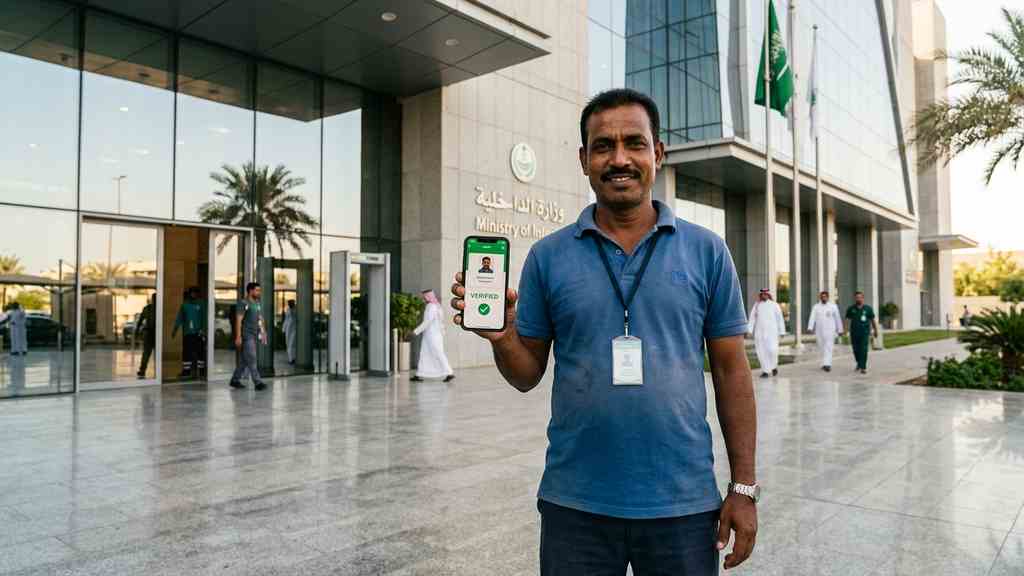
In the modern 2026 Saudi administrative structure, even without the physical card at a traffic police or security force checkpoint on the street, showing the digital copy on a smartphone is treated as a complete official document. This Iqama status is instantly verified from the central database when operating a bank account, transacting on a money-transfer app, buying a new mobile SIM, or even entering Mecca to perform the holy Umrah. Regularly studying our main Saudi Arabia Expatriate Guide and Updates 2026 is extremely fruitful for getting a full picture of various sectors in Saudi Arabia and preparation for life abroad.
Two main types of migrant workers are present in Saudi Arabia — institutional/commercial workers (Amel Sharikah) and personal domestic workers (Amel Manzil or Sayeq Khas). Institutional workers' Iqamas are directly registered in the triangular network of the Ministry of Human Resources and Social Development (MHRSD), Qiwa, and Jawazat. On the other hand, the entire process for domestic workers is run through the Musaned and Absher platforms. The first condition for protecting an expatriate's legal rights is always keeping their status active using their own Iqama number and date of birth.

Urgent legal rule: Under the law of the Saudi Passport Directorate (Jawazat), a 500 Saudi riyal fine is imposed the first time if renewal doesn't happen within 3 days after the Iqama's term ends. A second such mistake means 1,000 riyal, and if caught by security forces a third time while expired, legal deportation (Khuruj Nihai) can take effect.
2. Detailed Online Steps for Checking Iqama Validity and Term
Many think they always have to depend on the kafeel or the company's Mandoub to see an Iqama's term or status. In reality, the Saudi government has kept a direct public-service arrangement to empower expatriates, through which anyone can verify their current residency status from any smartphone or ordinary computer within just a few moments.
Method 1: The Ministry of Interior's (MOI) Public Query Gateway
Without even logging into an Absher account, term can be verified this way using just the combination of Iqama number and date of birth:
Step 1: Go to the Ministry of Interior's portal or our site's dedicated Iqama check online tool page. Step 2: Type your own 10-digit Iqama number in the "Iqama Number" input box (remember, foreign workers' Iqama numbers usually start with 2). Step 3: Select date of birth from the calendar option. Here you have the option to select the date of birth in either the Hijri (Islamic calendar) or Gregorian (English calendar) format. It's usually easier for most Bangladeshi workers to select the English calendar. Step 4: Correctly provide the 4-digit image code (image verification code) shown on screen and click "View Details." Step 5: Your Iqama's final term will appear on screen in both Hijri and English formats. If the status has a green border, your Iqama is fully valid. But if you see a red border, understand that the term has expired and urgent action is needed.
Method 2: Contract and Iqama Status Based on the Qiwa Portal
Qiwa is the most modern medium to know whether your employment contract is active and whether the kafeel has renewed your work permit. A worker can log into the Qiwa platform to monitor their job contract's validity and the detailed timeline of Iqama expiry. For detailed rules about Qiwa, see our Qiwa Platform and Saudi Labor Law Rights Guideline.
Logging into Qiwa clearly shows your contract's start and end dates and the company's current Nitaqat color. 60 days before contract renewal, the system automatically sends notifications to both the worker and the owner, so that neither party falls into a sudden crisis.
Beware of broker rings: Many fraud rings on social media show fake edited screenshots claiming they've renewed an Iqama online at low cost. Remember, no intermediary can renew an Iqama without the official banking gateway (SADAD). Always check for yourself on the official portal to be sure.
Mismatch Between the Jawazat and Ministry of Labor Databases, and Its Solution
Sometimes it's seen that the Ministry of Labor's (MHRSD) website shows Iqama renewal as successful, but the status hasn't updated on the Jawazat or Absher portal. The main reason for this is that after renewing the work permit, if the company doesn't separately pay the 650-riyal fee set by Jawazat through the bank channel, the system holds the entire renewal process pending. If such a technical mismatch is seen even though the kafeel's account has sufficient balance, submitting an electronic ticket on Jawazat's "Tawasul" online service portal automatically synchronizes the server data within 24 to 48 hours.
There is also a deep legal relationship between passport term and Iqama term. Under Saudi passport law, if your passport's term is less than 3 months, the system often blocks Iqama renewal for the whole 1 year. So before paying the Iqama renewal fee, it's extremely important to verify that the passport has at least 6 months remaining. If the passport has expired, e-passport renewal must be completed immediately at the Bangladesh Embassy or consulate and the information transfer (Naql Maloomat) to Jawazat completed.
3. Absher Individuals Portal Services and Facilities
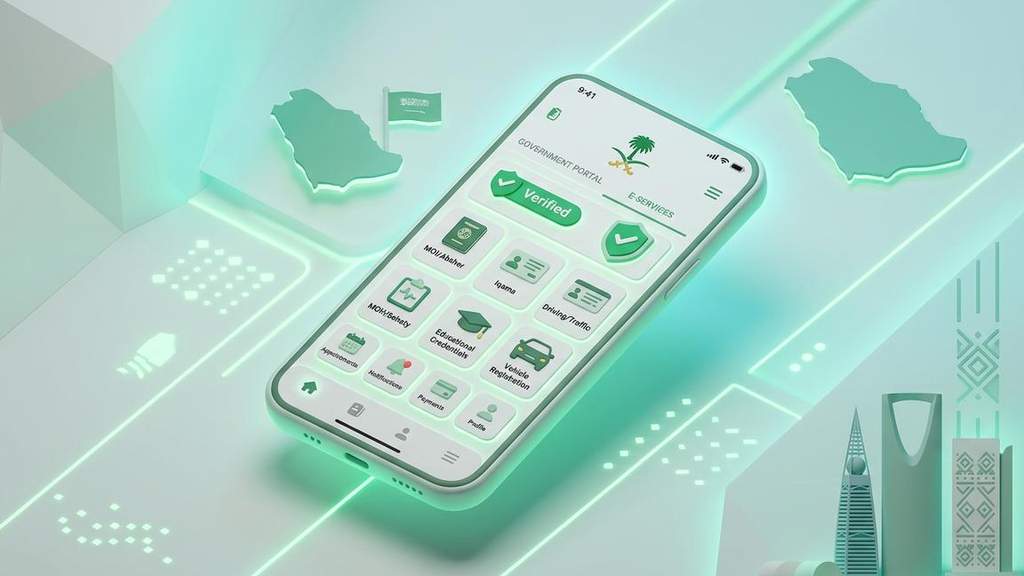
The center of expatriates' daily civic and administrative services in Saudi Arabia is "Absher." All services of the Passport Directorate, Traffic Department (Muroor), Civil Affairs, and Civil Defense have been integrated into this single platform. Having an active Absher account is extremely essential for every expatriate.
Absher Account Registration and Self-Service Kiosk Method
After arriving in Saudi Arabia, new expatriates must first go to an "Absher Fingerprint Kiosk" (self-service machine) set up in any shopping mall, Jawazat office, or airport and give their right and left index fingerprints to activate Absher. Then, setting a password online with a mobile number obtained on a Saudi SIM in their own name activates the account.
Important services available from Absher:
My Personal Information: Your full Arabic and English name, passport number, profession, border number, and blood group. Sponsor & Company Details: You can clearly see your current kafeel or company's name, file number, and sponsorship ID. Exit Re-Entry Visa Information: You can clearly see whether a vacation visa has been attached in your name, how many days of leave, and the last date to return to Saudi Arabia. Traffic Violations & Fines: You can directly track whether any fine has come through a Saher camera while driving a car or motorcycle. For details on traffic rules and fines, see our Saudi Driving License and Traffic Fine Guide. Passport Details & Renewal Status: You can monitor whether new passport data has been updated in Jawazat after passport renewal. Tawasul Electronic Service: Any complex problem, such as correcting a wrong name or transferring passport information, can be solved through an online ticket without physically going to the Jawazat office.
4. Muqeem Portal and the Official Rule for Printing an Exit Re-Entry Visa
The problem expatriates face most before going to Bangladesh on leave is about the "visa print" or the validity of travel documents. At boarding time at the airport, the airline counter asks to see a valid exit re-entry paper. The Muqeem (Muqeem.sa) portal is such a gateway of Saudi immigration through which a visa paper can be downloaded and printed at any time without logging in.

The Difference Between Single and Multiple Vacation Visas and Term Calculation
Under Saudi Ministry of Interior rules, an exit re-entry visa is mainly of two types:
Single Exit Re-Entry (Single Visa): Usually issued for 30, 60, or 90 days. The government fee is 200 riyal for the first 2 months and 100 riyal for each additional month after that. On this visa, you can leave the country once and re-enter Saudi Arabia. As soon as you enter, this visa's validity ends. Multiple Exit Re-Entry (Multiple Visa): Suitable for those who frequently travel to various countries for business or personal work. The fee is 500 riyal for the first 3 months and 200 riyal for each subsequent month. You can leave and enter Saudi Arabia as many times as you want during the term.
3 easy steps for visa verification on the Muqeem portal:
Step 1: Go to the "Visa Validity" option on the Muqeem website. Provide your Iqama number or visa number in the first input field. Step 2: Select your passport number, name, or date of birth in the second field for cross-matching. Step 3: Click the "Check" button. If your visa is active, a complete colored visa certificate will open on screen, specifically stating the visa-issuing officer, the visa type (single or multiple), and the last day to enter Saudi Arabia. This can be saved directly as a PDF and printed.
Official Rule for Extending a Visa While in Bangladesh on Leave
If an expatriate can't return to Saudi Arabia within their scheduled leave term due to an urgent family matter, business, or physical illness, it is completely legal to extend the leave term through the kafeel while still at home. The kafeel or the company's Mandoub can go to the "Extend Exit Re-Entry Visa" option on their Absher Business or Muqeem portal, pay a 100 riyal government fee per additional month through the SADAD channel, and extend the leave term. However, the condition is that the worker's Iqama and passport term must exceed the proposed leave term.
If the term isn't extended within 30 days after the leave term expires, the worker is automatically marked in the system as "Khuruj Lam Ya'ud" (left the country but did not return). Under Saudi Jawazat law, if a worker is listed as Khuruj Lam Ya'ud, they cannot enter Saudi Arabia on any new visa, without the previous kafeel's sponsorship, for the next 3 years. So it's extremely wise to maintain constant contact with the kafeel before the leave term ends.
5. Digital Residence ID on the Tawakkalna Services App
The Tawakkalna Services app, run by the Saudi Data and AI Authority (SDAIA), has now become every Saudi expatriate's most effective digital pocket. Even if the physical plastic card is lost, showing the virtual ID present in the Tawakkalna app is accepted as completely legal.

Important Digital Documents Stored in Tawakkalna
Going to the "Digital Document" section on the Tawakkalna app shows a digital Iqama card with your photo. Its special feature is the dynamic QR code and barcode at the bottom, which refreshes every few seconds. Any police officer or bank official who scans it instantly gets proof of your current validity from the central Jawazat server.
Digital driving license: If you have a Saudi license, its digital copy is automatically synchronized here. Vehicle registration (Istimara): The Istimara paper of a car bought in your name can be shown directly from your mobile. National Address (Unwan Watani): Official proof of the approved National Address needed for opening a bank account and parcel delivery in Saudi Arabia is available from Tawakkalna. Health insurance card (CCHI Insurance): Details of digital health insurance for free or discounted emergency treatment at hospitals and clinics are shown here.
6. Iqama Renewal Fee List and Maktab Amal Levy 2026
The cost amount for expatriates' Iqama renewal in Saudi Arabia is determined by the worker's establishment type, the proportion of Saudi citizens at the establishment (Saudization), and the expatriate's profession. Under Saudi labor law, the Maktab Amal levy and Iqama renewal fee for institutional or commercial workers are supposed to be borne entirely by the employer.

| Service/cost category | Annual government fee (SAR) | Legal responsibility to pay | Comments/details |
|---|---|---|---|
| Jawazat Iqama fee | 650 riyal | Employer/kafeel | Annual residence permit fee (payable in 3, 6, 9, or 12-month installments) |
| Maktab Amal fee (work permit levy) | 9,600 riyal (800 riyal/month) | Company/kafeel | If the establishment has more foreign workers than Saudi workers |
| Discounted Maktab Amal fee | 8,400 riyal (700 riyal/month) | Company/kafeel | If the establishment's Saudi-to-foreign worker ratio is 50:50 or higher |
| Domestic worker Iqama fee (Amel Manzil/Sayeq Khas) | 600 riyal | Personal kafeel | No Maktab Amal levy for domestic workers and private drivers |
| Family dependent levy | 4,800 riyal (400 riyal/month) | Expatriate themselves | Must be deposited in advance annually at this rate for a wife and each child |
| Late renewal fine (first time) | 500 riyal | Responsible party | Automatically added to the government system after 3 days past expiry |
You can follow our Saudi Riyal Rate and Bank Remittance Guide 2026 after Iqama renewal to ensure correct calculations for expatriates' regular savings and sending money home.
Complete Steps for Paying the Iqama Fee via SADAD Code and Mobile Banking
The primary, secure gateway for paying any government administrative fee in Saudi Arabia is "SADAD." Expatriates can very easily verify and pay this fee through their own accounts from the Al Rajhi Bank, SNB (Al Ahli), Riyad Bank, or STC Pay app:
Step 1: Log into your own online banking or mobile app and go to the "SADAD & Government Payments" option. Step 2: Select "Alien Control" or "MOI Expatriate Services" as the biller category and choose "Renew Iqama" as the sub-service. Step 3: Select "Payment" as the transaction type and specifically enter the expatriate's 10-digit Iqama number and the renewal period (3 months, 6 months, 9 months, or 12 months). Step 4: Carefully check the total amount payable shown on screen (fee and any applicable late fine) and confirm payment by entering the OTP code sent to your mobile. As soon as payment succeeds, the money is recorded on Jawazat's central server, and the employer can activate the new digital Iqama in one click.
7. Nafath App and the Biometric OTP Verification System
Previously, an ordinary SMS OTP used to arrive on mobile for any online service. But to increase cyber security and root out SIM cloning crime, the Saudi government has made "Nafath" national single sign-on mandatory. Currently, no financial or government transaction service is possible without Nafath verification.

The Practical Working Method for Using the Nafath App
Whenever you open a bank account, get a mobile SIM, or log into the Qiwa platform, a two-digit number (e.g., 47) will pop up on the computer screen. Immediately, you must open the Nafath app on your mobile, tap "Accept," and select that same specific two-digit number on the screen. Then, only once your face scan or PIN code succeeds will the system approve the login.
If your face scan doesn't succeed, go to adequate lighting, keep your eyes open, and hold the phone steady. It's best to temporarily remove glasses or a cap before scanning.
8. Company Nitaqat Status and the Law on Red-Category Companies
Whether your Iqama will be renewed in Saudi Arabia largely depends on your workplace's "Nitaqat" (Saudization category) status. Under Saudi labor law, companies are arranged into four main tiers based on their Saudization rate:

Platinum & High Green: These establishments employ a sufficient number of Saudi citizens. They can issue new visas at any time and renew workers' Iqamas instantly. Their score is highest for worker satisfaction and wage payment. Medium & Low Green: Legally valid but enjoy limited facilities. Some conditions apply for allocating new visas. Red Category (Red Nitaqat): These companies have completely failed to meet the government's Saudization conditions. No worker's Iqama can be renewed under a Red company. However, the biggest legal advantage is that if your company falls into the Red category, you can directly get kafala (change jobs) to any other valid company through the Qiwa platform, without any clearance (NOC) from the current kafeel. To learn the detailed steps of kafala and labor law, read our Qiwa Platform and Saudi Labor Law Rights Guideline.
The Saudi Labor Reform Initiative and Expatriates' Legal Protection (Articles 39 and 83)
As a result of Saudi Arabia's Labor Reform Initiative (LRI), expatriates' civic and employment rights have become far more solid than before. A kafeel or company can no longer hold a worker hostage or harass them at will. Under Article 39 of Saudi labor law, holding a worker's original passport is a completely punishable offense. If an employer refuses to return a passport, filing a complaint with the labor department can result in a fine of up to 20,000 riyal against the employer.
Similarly, if a company drags its feet on final exit or kafala after a worker's contract term ends, the Qiwa platform's automatic notice system gives the worker the legal right to freely change jobs at any other establishment. In cases of unpaid wages, filing an online case at labor court leads a neutral government-appointed arbitration team to conduct a settlement meeting with both parties within 21 working days and ensure fair recovery of dues.
9. Complications in Iqama Renewal, Common Mistakes, and Resolution Guide
Sometimes it's seen that even after the kafeel deposits the required fee at the bank, the Iqama isn't renewing in the government system. Behind this lie certain administrative complications or pending data, which, if known, can be resolved quickly:

Problem 1: Health insurance not updated: Under Saudi rules, Jawazat does not issue any Iqama if there is no active health insurance in the Council of Cooperative Health Insurance (CCHI) database. The kafeel must be told to contact the insurance company to have the policy pushed to the server. Problem 2: Outstanding traffic fine: If there is any unresolved Saher fine or traffic fine on the expatriate's Iqama, it must first be paid through the SADAD channel. The system rejects renewal while a fine is outstanding. Problem 3: Passport term less than 6 months: The Iqama can get stuck if your new passport's information isn't updated (Naql Maloomat) in the Passport Directorate's database. As soon as you get a new passport from the embassy, get the information updated at Absher or the Jawazat office. For information on the Bangladesh Embassy's passport service, see our Saudi Bangladesh Embassy Consular and E-Passport Guide. Problem 4: Not taking the professional skill verification (SVP) exam: Workers in the technician, plumber, or electrician category are required to pass the SVP exam. If the exam isn't taken, Iqama renewal gets blocked.