
1. Rules for Performing Umrah on an Iqama or Visit Visa 2026
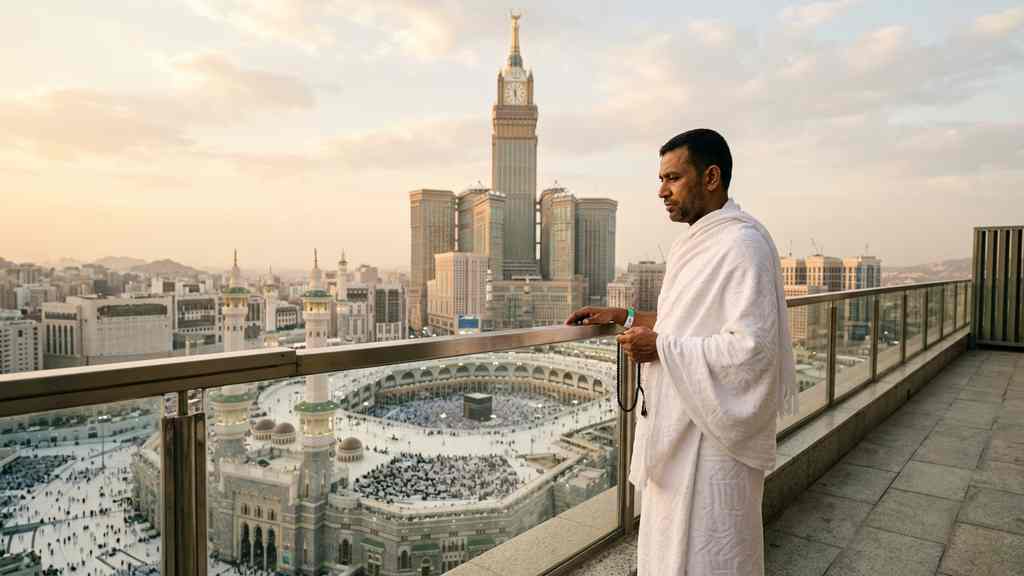
Millions of Muslims from various corners of the world spend a huge amount of money and time to come to Saudi Arabia to perform Umrah. But it is an endless blessing for Bangladeshi expatriate workers employed there that they can visit the holy Kaaba and Masjid an-Nabawi at extremely low cost during any opportunity alongside their working life.
Under Saudi Arabia's Vision 2030, the Ministry of Hajj and Umrah and the Ministry of Interior have made the Umrah process completely digital and hassle-free for ordinary expatriates. Under the current rules, anyone holding a valid Iqama, their relatives arriving on a family visit visa, or even transit visa holders can comfortably perform Umrah by obtaining a permit through the government Nusuk platform.
Important information: Previously, a special Umrah visa had to be obtained through a travel agency to perform Umrah. Now, it is possible to download an Umrah permit for free on any day on the Nusuk app through a personal visit visa, tourist visa, business visa, or a valid work Iqama.
Basic conditions of Umrah for Iqama holders:
Valid Iqama and health insurance: The applicant's Iqama must be active, and the status on the Absher and Tawakkalna servers must be valid. Nusuk digital permit: A digital permit with a QR code from the Nusuk app is mandatory to enter the Haram Sharif in Mecca. This permit is scanned at Mecca's security checkpoint or at the Haram Sharif's gate. Hajj season restriction awareness: Every year, strict restrictions are imposed on outsiders entering the city of Mecca from after the month of Shawwal until the Hajj in the month of Dhul-Hijjah is completed. Entering Mecca during the specific Hajj days without a special Hajj Tasrih (Hajj Permit) can result in a fine of up to 10,000 riyal for Iqama holders. However, outside the Hajj season, Umrah remains open to expatriates for the rest of the year.
2. Nusuk App Installation and Account Registration Method
Previously, an application called "Eatmarna" was used in Saudi Arabia for Hajj and Umrah permits. Later, the Saudi government modernized it and transformed it into the single national platform Nusuk (نسك). This app is currently available completely free on the Google Play Store and Apple App Store.
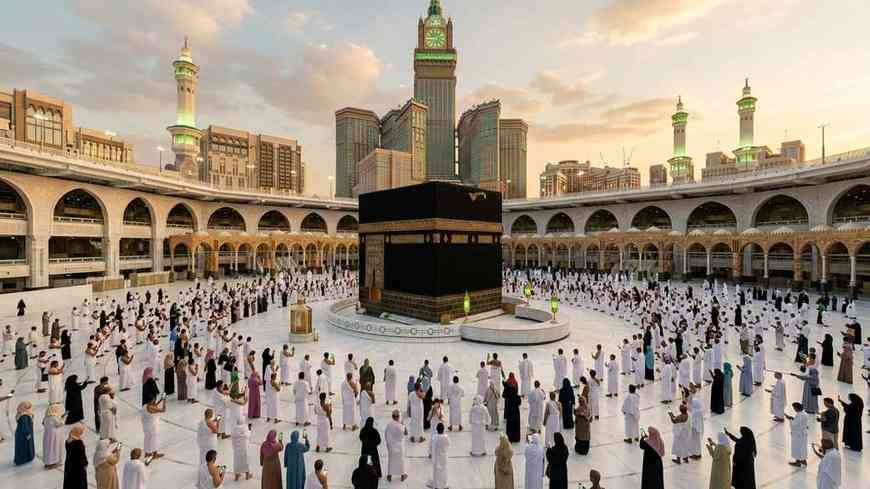
Steps to open a new account on the Nusuk app:
Step 1: App download and language selection
Download the official Nusuk app from the Google Play Store or Apple App Store. Open the app and select English or Arabic.
Step 2: Selecting user category
On the app's login screen, you will see three options: (1) Citizen or Resident (citizen or Iqama holder), (2) Gulf Visitor (GCC citizen), and (3) Visitor (international visit visa holder). If you are in Saudi Arabia on a work Iqama or family Iqama, select Citizen or Resident. If you have come from Bangladesh on a visit visa, press the Visitor option.
Step 3: Providing necessary information and OTP verification
For Iqama holders, the Iqama number, the mobile number registered with Absher, date of birth, and a secret password must be provided. Then a four-digit OTP code will arrive on your mobile. Typing and submitting the OTP code will activate the account.
3. Umrah Permit Booking and Schedule Selection on the Nusuk App
Once an account is created on the Nusuk app, booking an Umrah permit is just a 2-minute task. However, choosing the right time is extremely important, so that Tawaf and Sa'i can be completed comfortably, avoiding excessive crowds in the Kaaba courtyard.
Sequential steps for obtaining an Umrah permit:
Log into the Nusuk app and tap the Umrah (العمرة) icon on the home screen. Select your name. If family members' Iqamas are linked, check the boxes next to their names. An interactive calendar will be displayed on screen. Three colors of slots can be seen on the calendar: Green: Light crowd (best for worship comfortably). Yellow: Moderate crowd. Red: Extreme crowd and busy time. After choosing your preferred date, slots for various times of day (such as 12 AM-2 AM, 8 AM-10 AM, 4 PM-6 PM, etc.) will be displayed. Select a convenient slot. Agree to the terms and press the Issue Permit button. A digital permit with a QR code will be created in your name immediately, which will be saved in the app's 'Permits' option.
Warning: If for any reason you cannot go at the scheduled time, cancel the permit through the app at least 4 hours before the permit's time begins. Entering the Mataf area of the Haram Sharif without a permit can result in a fine or being stopped by security guards.
The 4 main pillars of Umrah and sequential acts:
- Ihram and intention (Niyyah): Before crossing the Miqat, take a bath or perform ablution, wear the Ihram cloth, and mentally make the specific intention for Umrah and begin reciting the Talbiyah (Labbaik Allahumma Labbaik...).
- Tawaf of the holy Kaaba (7 circuits): While in a state of ablution and purity, complete a total of 7 circuits starting from the corner of the Black Stone (Hajar al-Aswad), keeping the Kaaba on the left, moving counter-clockwise. In the first three circuits, it is Sunnah for men to do 'Ramal' (walking briskly with shoulders swaying proudly) and to keep the cloth under the right armpit and over the left shoulder (Idtiba). After Tawaf, two rakats of Tawaf prayer must be offered behind Maqam Ibrahim or anywhere in the Haram. Then it is Mustahabb to drink Zamzam water to one's fill and pour water on the head.
- Sa'i between the hills of Safa and Marwah (7 times): Complete a total of 7 circuits walking from Safa hill to Marwah hill (going from Safa to Marwah is 1 circuit, coming from Marwah to Safa is 2 circuits, and so on until the 7th circuit is completed at Marwah). It is Sunnah for men to run briskly in the section marked with green lights between Safa and Marwah.
- Halq or Qasr (shaving the head or trimming the hair): After completing Sa'i, it is best for men to shave the entire head completely (Halq), or to trim all the hair on the head evenly by about a finger's width (Qasr). For women, a fingertip's length of hair must be cut from the ends of all their hair. This completes the formality of Umrah, and all restrictions of Ihram end, making it permissible to wear normal clothing.
Wheelchair and electric cart service for elderly and sick worshippers:
The ground-floor Mataf courtyard of the Haram Sharif is open only for worshippers walking normally. If you have elderly parents, a pregnant wife, or a physically disabled patient with you, special wheelchairs and eco-friendly electric golf carts can be used on the second floor and roof:
Manual wheelchair: A government manual wheelchair can be obtained completely free from the Haram's designated booth. And if you want to take one with an assisting driver, Tawaf and Sa'i can be done by paying the Haram's officially licensed, uniformed drivers a set government fee (generally 100 to 150 riyal). Smart electric cart: Single-seater (1 person) and double-seater (2 person) rechargeable electric carts are available for rent on the Haram's mezzanine floor. Their fees are 50 riyal and 100 riyal respectively. Worshippers can drive themselves and complete Tawaf and Sa'i extremely comfortably.
4. Holy Rawdah Sharif (Riyadh al-Jannah) Visit Permit and Etiquette
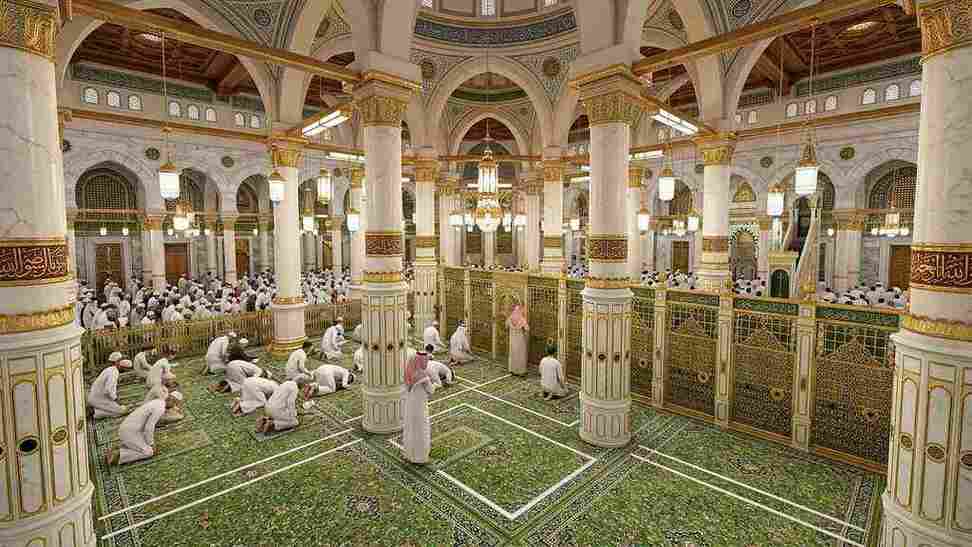
The space between the Prophet Muhammad's (peace be upon him) holy Rawdah Sharif and the pulpit at Masjid an-Nabawi in Medina is called Riyadh al-Jannah, or the Garden of Paradise. Offering two rakats of prayer here and presenting salutations to the beloved Prophet (peace be upon him) and his two companions is the lifelong cherished dream of every believer.

Strict rules for Rawdah Sharif booking:
One opportunity per year: Under the current policy of the Saudi Ministry of Hajj and Umrah, a person can get a Rawdah Sharif visit permit only once in 365 days. So it is wise to apply after confirming the specific date of the trip to Medina. Separate schedule for men and women: Separate entry paths and distinct schedules are allocated for men and women on the Nusuk app. Women are generally allowed entry through a specific gate after the Fajr and Isha prayers. Timely presence: At least 15 minutes before the time mentioned on the permit, you must be present at the designated gate (such as generally Gate No. 38 or Bab as-Salam for men) and show the QR code. If you go after the scheduled time, the gate may be locked.
Etiquette for prayer and visit at the Rawdah: After entering the green carpet of Riyadh al-Jannah, calmly offer two rakats of Tahiyyatul Masjid and voluntary prayer without pushing other worshippers. Refrain from disturbing the holy environment with excessive selfies or video recording on mobile phones. Then calmly present salutations before the holy graves of the Prophet (peace be upon him), Hazrat Abu Bakr (may Allah be pleased with him), and Hazrat Umar (may Allah be pleased with him), and exit.
Special schedule and entry gate for women's Rawdah Sharif visit:
To ensure women's privacy and the highest security at the holy Masjid an-Nabawi, the Saudi government sets a distinct schedule for the Rawdah Sharif visit. Booking is only possible when the slot opens for women on the Nusuk app:
Entry gate: Gate No. 37 (Bab Uthman) on the north side of Masjid an-Nabawi and Gate No. 24 are mainly used as the main entry points for women's visits and prayers. Daily schedule: The Rawdah is generally open for women in two shifts daily — (1) Morning shift: from after Fajr prayer until 9 AM or 9:30 AM, and (2) Night shift: from 9 PM after Isha prayer until midnight. Advice: Entry with large luggage or sharp items in women's bags is prohibited. If accompanied by children, their behavior must be kept calm, and going in a group is most convenient.
5. Miqat Boundaries, Correct Rules for Wearing Ihram, and Prohibited Acts
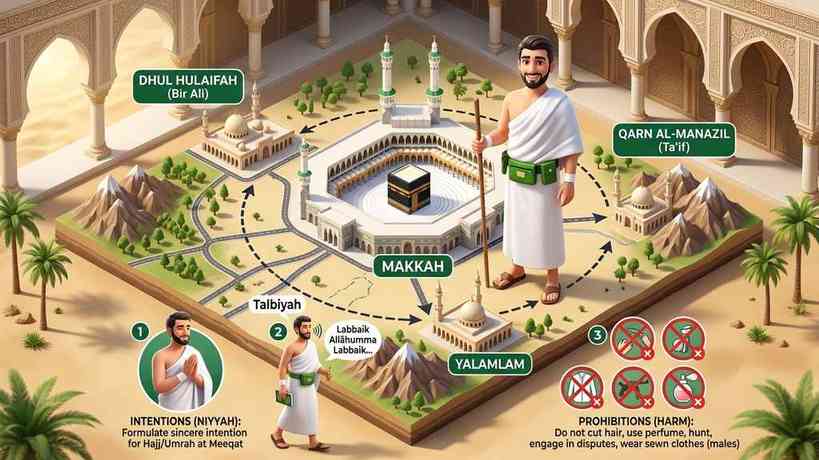
The specific geographic boundary set by Sharia before entering the city of Mecca for the purpose of performing Umrah is called the Miqat. It is obligatory (wajib) for every worshipper to make the intention for Umrah, wear the Ihram cloth, and recite the Talbiyah before crossing the Miqat. If the Miqat is crossed without Ihram, it becomes wajib to offer a Dam (animal sacrifice).
Miqats for arrivals from various regions of Saudi Arabia:
| Name of Miqat | Current identity | For passengers of which area | Distance from Mecca |
|---|---|---|---|
| Dhul Hulaifah | Masjid ash-Shajarah / Abyar Ali | For passengers coming by road or train from Medina | About 450 km (at Medina's boundary) |
| Yalamlam | As-Sa'diyah (Al-Sadiyah) | For air passengers from Yemen, Bangladesh, India, and Asia | About 100 km southeast |
| Qarn al-Manazil | As-Sayl al-Kabir (Al Sail Al Kabir) | For expatriates arriving from Riyadh, Dammam, Taif, and the Najd region | About 75 km east |
| Al-Juhfah | Near Rabigh | For those arriving from Egypt, Syria, and the northwest direction | About 187 km northwest |
| Tan'eem | Masjid Aisha (may Allah be pleased with her) | The Miqat for Mecca residents performing a second Umrah | Just 7.5 km (outside the Haram boundary) |
Main conditions of Ihram and prohibited matters:
For men, Ihram consists of two unstitched white sheets (one worn around the waist called 'Izar' and the other wrapped around the body called 'Rida'). For women, normal modest clothing is the Ihram garment, but the niqab must not be fastened tightly on the face. The following acts are completely prohibited while in Ihram:
Wearing any stitched clothing (such as shirts, pants, underwear, etc.) for men. Applying any type of perfume or fragrance to the body or clothing. Covering the head or face with any cloth or cap (for men). Cutting hair, beard, nails, or removing body hair. Engaging in any sexual discussion, intercourse, or conducting a marriage contract. Quarreling, using abusive language, or engaging in any kind of wrongful behavior.
6. Mecca-Medina Haramain High Speed Bullet Train Travel Guide
Previously, going from Mecca to Medina by bus or private car required traveling a long, exhausting journey of about 6 to 8 hours. But now, after the launch of the modern technology Haramain High Speed Railway (HHR), the distance from Mecca to Medina has come down to just 2 hours 20 minutes. This bullet train, running at 300 km/h, has made expatriates' Umrah journey extraordinarily comfortable and safe.
The 5 main stations of the Haramain train:
Makkah Station: Located in the Rusaifah area, just 4 kilometers from the holy Haram Sharif. Free shuttle bus and taxi service are available from here. Jeddah Al-Sulaimaniyah Station (Jeddah Central): The main hub located in the center of Jeddah city. King Abdulaziz Airport Station (JED Airport): An international-standard station located directly inside Terminal 1 of Jeddah Airport. You can board the train directly upon deplaning. King Abdullah Economic City Station (KAEC): A modern industrial city station in the Rabigh region. Madinah Munawwarah Station: Located in the Al-Hadiqa area, just 9 kilometers from Masjid an-Nabawi. Regular buses run from here.
| Travel route | Approximate journey time | Economy class fare (with VAT) | Business class fare (with VAT) |
|---|---|---|---|
| Mecca ⇄ Medina | 2 hours 20 minutes | 150 - 172 Saudi riyal | 315 - 360 Saudi riyal |
| Jeddah Airport ⇄ Mecca | 54 minutes | 34 - 46 Saudi riyal | 70 - 85 Saudi riyal |
| Jeddah Airport ⇄ Medina | 1 hour 48 minutes | 120 - 140 Saudi riyal | 260 - 290 Saudi riyal |
| Jeddah Central ⇄ Mecca | 34 minutes | 23 - 28 Saudi riyal | 50 - 60 Saudi riyal |
Rules for buying train tickets online:
Download the HHR Train app on your smartphone or go to the sar.hhr.sa website. Select the departure and destination stations and choose the date and train time. Then provide the passenger's name, Iqama or passport number, and complete payment using a Saudi Mada card or international credit card. The ticket will arrive in your email and app as a PDF.
Luggage policy and travel precautions on the Haramain bullet train:
Extremely strict luggage policy, similar to air travel, is followed when traveling on the Haramain High Speed train. If you arrive at the station with excess or unauthorized luggage, you may be barred from boarding the train:
Bag count and measurement: Against each ticket, a passenger can carry a maximum of 1 main piece of luggage (maximum weight 25 kg, size 65x55x35 cm) and 1 small hand bag or laptop bag. There is no option to take extra luggage even by paying an extra fee. Zamzam water transport policy: Carrying Zamzam water in open or unauthorized plastic containers is strictly prohibited in the Haramain train carriages. Only the airport-approved sealed 5-liter Zamzam water official carton can be sent under specific conditions, subject to booking at a special luggage counter. Alternative transport (SAPTCO VIP bus): If you have excessive luggage, you can travel by the government Saudi Public Transport Company's (SAPTCO) VIP AC express bus instead of the train. It has much more capacity for carrying luggage, and the fare is just 70 to 85 riyal.
7. Halal Food, Grocery, and Family Living in Saudi Arabia
As one of the world's leading Islamic countries, almost all food items and meat marketed in Saudi Arabia are completely halal and strictly regulated by the Saudi Food and Drug Authority (SFDA). As a result, expatriates do not have to face any doubt about halal-haram regarding food.

Food and supermarket facilities in Saudi Arabia:
Famous supermarket chains: Panda, Lulu Hypermarket, Al Othaim, Tamimi Markets, and Carrefour exist in every major city of Saudi Arabia. Bangladeshi rui-katla fish, green chili, homeland spices, fragrant rice, and vegetables are available at extremely affordable prices here. Fresh halal meat and poultry: Completely Sharia-compliant fresh chicken from local brands like 'Al-Watania', 'Al-Baik', 'Fakieh', and verified halal mutton and camel meat from butcher shops are available. Pork or alcohol is legally completely prohibited and a strictly punishable offense in Saudi Arabia. Family accommodation and Ejar contract: For renting a flat to live with family, a digital contract through the government online platform 'Ejar' is mandatory. As a result, the rights of both landlord and tenant are fully protected, and transparent accounting of water and electricity bills is available.
Islamic banking and the government sacrifice (Adahi) project in Saudi Arabia:
Muslim expatriates living in Saudi Arabia can conduct their financial transactions and religious donations in a completely Sharia-compliant manner:
Sharia-based Islamic banks: Al Rajhi Bank, Alinma Bank, and Bank AlJazira are operated completely interest-free under the supervision of an Islamic Sharia board. Expatriates can use the Islamic current accounts of these banks for their savings and remittance transfers. Government sacrifice and Dam payment project (Adahi Project): If a Dam becomes wajib due to any Miqat-related error during Umrah, or if you want to offer sacrifice during Eid al-Adha, instead of being cheated by brokers in the open market, buy a coupon online through the Saudi government's official Project for Utilization of Hajj Meat (Adahi - اضاحي) (adahi.org.sa). The animal is slaughtered hygienically at a government abattoir and distributed among poor Muslims in various countries around the world.
8. The Month of Ramadan Iftar Culture, Taraweeh, and Eid Celebration
The arrival of the holy month of Ramadan in Saudi Arabia means the creation of an otherworldly spiritual atmosphere. When Muslims from various countries around the world sit together for Iftar in the mosque, there is no room for language or racial distinction there.

Unique features of Ramadan in Saudi Arabia:
Open Iftar spread: During Ramadan, large tents are set up in every mosque's courtyard and on streets to arrange completely free Iftar. This includes delicious Saudi dates (Ajwa, Sukkari), cold water, Arabic juices (Sobia, Vimto), samosas, and hot meat rice. Any expatriate can go there and have Iftar with great warmth. Reduced working hours: Under Saudi labor law, it is mandatory to reduce Muslim workers' daily working hours from the normal 8 hours to a maximum of 6 hours (36 hours per week) during Ramadan. As a result, expatriates get sufficient opportunity for rest and worship. Holy Qiyam al-Layl and the last ten days: In the last third of Ramadan, millions of worshippers sit in Itikaf at the two Haramain in Mecca and Medina, and Tahajjud and Qiyam al-Layl prayers are offered in congregation late at night. Colorful congregation of both Eids and government holiday: On Eid al-Fitr and Eid al-Adha, the Eid congregation is held in Saudi Arabia's vast open fields right after sunrise. At this time, workers in both the private and government sectors enjoy a full Eid holiday of a designated 4 to 7 days with pay.
9. Five Daily Prayers, Azan Break, and Saudi Social Regulations
Saudi Arabia is a land where the melody of the five daily prayers echoes constantly in every alley. The importance of prayer amid busy working life is established as an inseparable part of Saudi culture.

Information related to prayer and social law:
Azan and congregation break: There is a beautiful mosque within walking distance in every neighborhood. Generally, the Iqamah (call to start the congregation) is held within 15 to 20 minutes after the Azan. Most commercial establishments temporarily suspend their work during this time to participate in prayer. Public Decorum Regulations: Since 2019, the 'General Decency' or Public Decorum Regulations have been in effect in Saudi Arabia for ordinary citizens and tourists. Under this, wearing obscene or indecent clothing in public, playing loud unnecessary music on loudspeakers, or taking photos or videos without people's permission is legally punishable. Maintaining religious respect: Observing a work pause during Friday prayer and refraining from eating or smoking openly during the day in Ramadan are extremely important, both legally and morally.
Saudi labor law and preservation of workers' religious rights:
Under the provisions of Saudi labor law, it is mandatory for every employer and company to provide the opportunity for workers to fulfill their religious duties:
Friday prayer holiday: Friday is Saudi Arabia's official weekly holiday. Workers must be given adequate rest and free opportunity to go to the mosque before and after Friday prayer. Prayer space and ablution facility at the workplace: A clean and suitable prayer space (Musalla) and proper water facility for workers are mandatory at every factory, workshop, shopping mall, or construction site. Hajj and Umrah leave: Under Saudi Labor Law Article 114, if a Muslim worker wants to perform the obligatory Hajj for the first time during their working life, they are legally entitled to a special Hajj Leave of 10 to 15 days with full pay after continuous employment of at least two years at their company.